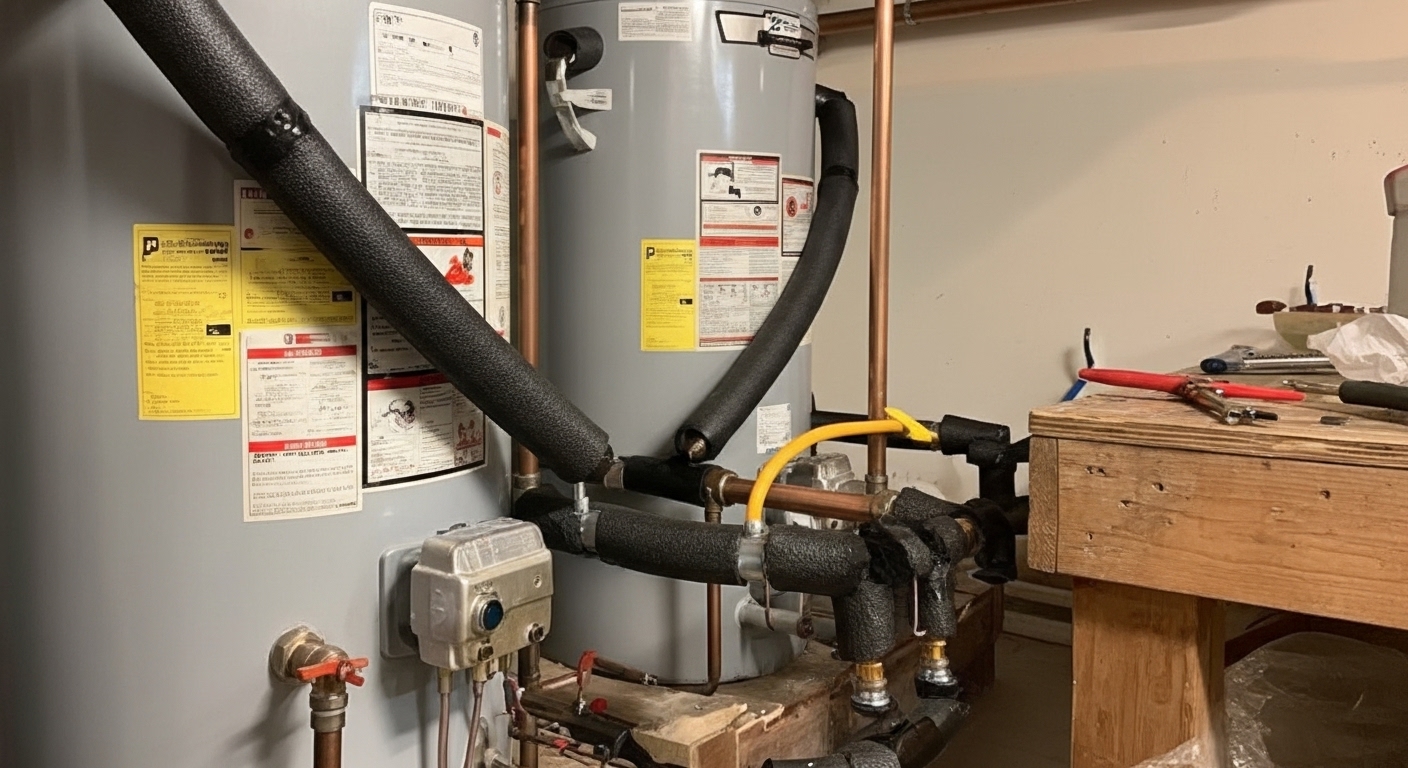
Old unit leaking, rusting, or just done? We pull it, put in a new one sized right for your home — usually the same day — and haul the old one away. Tank or tankless. A new water heater sized to the home lasts longer than one sized to the shelf. We handle gas water heater and electric water heater swaps the same day.
Request a Free Estimate
Thank You!
We'll get back to you shortly. For immediate help, call (983) 209-1502.
Old unit out, new one in — most often the same day you call. Most water heaters go in and out inside a morning.
We remove and dispose of your old water heater. Included.
Full price — unit, labor, haul-away — before we start.
Qualified pros swapping your water heater the right way.
If your water heater's showing any of these, a repair won't cut it — it's time for a new one. We'll confirm and lay out your options. Water heaters give plenty of warning if you know what to look for. The plumbing around the unit usually shows it first.
Most tanks last 8 to 12 years. Past that, a failure isn't far off, and replacing on your terms beats an emergency at 2 a.m. Age alone is enough. A water heater past twelve is running on borrowed time whatever the gas bill says.
Water seeping from the body of the tank (not a fitting) means it's rusted through. That's not repairable — it's replacement time. Once the shell goes there is nothing to fix. A new water heater is the only route, and the plumbing connections come with it.
When the inside of the tank starts to corrode, no repair brings it back. A new unit is the only real fix. Corrosion works from the inside out. By the time it shows, the water heater is finished.
Cold showers even after a service call usually mean the tank is simply worn out and can't hold temperature. An electric water heater with a failed element behaves the same way, so we test before condemning it.
When repair bills start stacking up every few months, a new unit is the smarter money over the long run. Repeat visits cost more than a new water heater within a year. We show the running cost either way.
Older units run longer and waste energy. A modern one heats more efficiently and costs less to run. Newer water heaters hold temperature with less gas. The saving shows up on the first full bill.
Once it's time, you've got a few directions — and we'll help you pick the one that fits. Tank, tankless water, gas or electric. Your existing hookups narrow it before budget does.
The simplest swap: a new tank like the one you have, sized to your home. Lowest upfront cost and the fastest install. A like-for-like gas water heater is the quickest route and the cheapest installation.
Always running out of hot water? We can step you up a size so the whole house is covered. A larger water heater costs little more at installation and covers a bigger home.
Endless hot water, a longer lifespan, and less floor space, for a higher upfront price. A popular move when you're replacing anyway. Tankless water units free up floor space and last longer. The installation is more involved.
Not sure which way to go? We'll size it with you and lay out the costs — there's a full rundown on our water heater installation page, and the details on going tankless. Sizing is a conversation, not a formula. Our water heater installation page has the full rundown.
Simple, straightforward. Here's how it works.
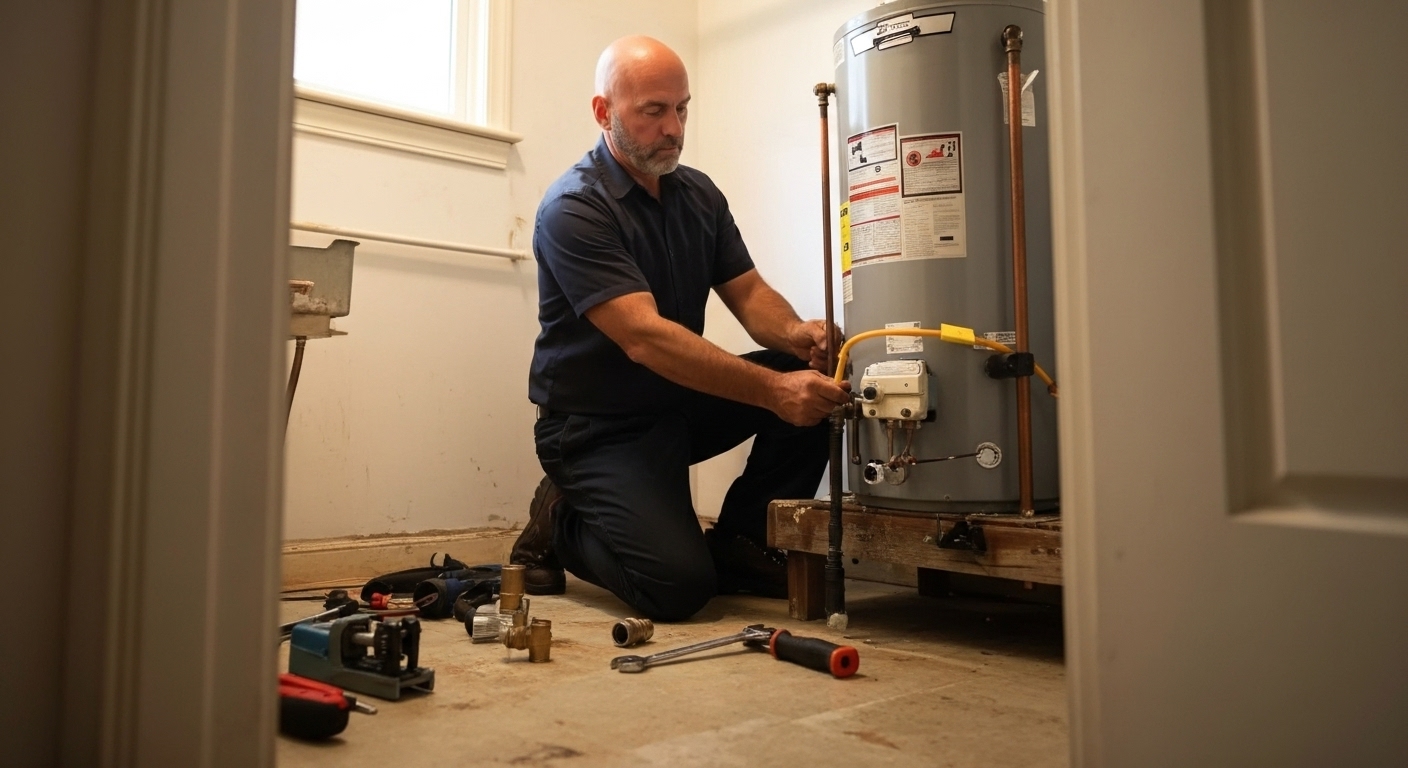
We're water heater experts, not a general plumber — repair, replacement, and installation is all we do, so we recommend the right unit and install it right the first time. One trade means we know the plumbing behind every water heater without looking it up.
Every make and model, the full price before any work starts, and a real person answers 24/7. Daniel's Water Heater Repair serves homeowners across Boulder and the surrounding metro. Gas water heater and electric water heater work across the Boulder metro, with services priced before we start.
These come up on almost every replacement, so here's the straight answer to each. These come up on most water heater jobs.
Swapping in a new tank usually runs $1,000 to $3,000 (gas a bit more than electric), while going tankless instead pushes it to roughly $2,000 to $6,000. The final number depends on the unit you choose and any setup updates — and haul-away of the old one is always included in the price we quote you upfront. Setup updates are where the cost moves. A gas water heater in a tight space can need venting work.
A few clear signs: the unit's past 8 to 12 years, the tank itself is leaking, you're seeing rust in the hot water, or it's needed repairs every few months. If it's still young and the problem's just a part, we'll tell you honestly — we also handle water heater repair. Age plus rust is the clearest signal. Water heaters rarely recover once the tank itself is going.
Always — it's part of every replacement. Once the new unit is in and tested, we drain the old one, carry it out, and dispose of it. You don't lift a finger. Haul-away is part of the services quoted, not billed on top. The old water heater leaves with us.
A tank is cheaper to put in and the fastest swap, so it's the default when you just need hot water back. Tankless costs more upfront but rewards you with endless hot water, a longer lifespan, and reclaimed space. Tell us how your household uses hot water and we'll point you to the better long-term value. Household size decides it more than price. A gas water heater suits high demand; tankless water suits steady use.
A like-for-like tank swap is typically done in 2 to 4 hours. Replacing with or switching to a tankless takes longer, around 4 to 8 hours, when the gas, venting, or electrical needs updating for the new unit. A straight swap needs no plumbing changes. Switching type usually does, and the water heater installation runs longer for it.
With normal use, a new tank should give you 8 to 12 years and a tankless 15 to 20. Flushing it once a year and keeping an eye on the anode rod helps it reach the high end of that range. Flushing matters most in hard water. Both water heaters reach the top of that range with it.
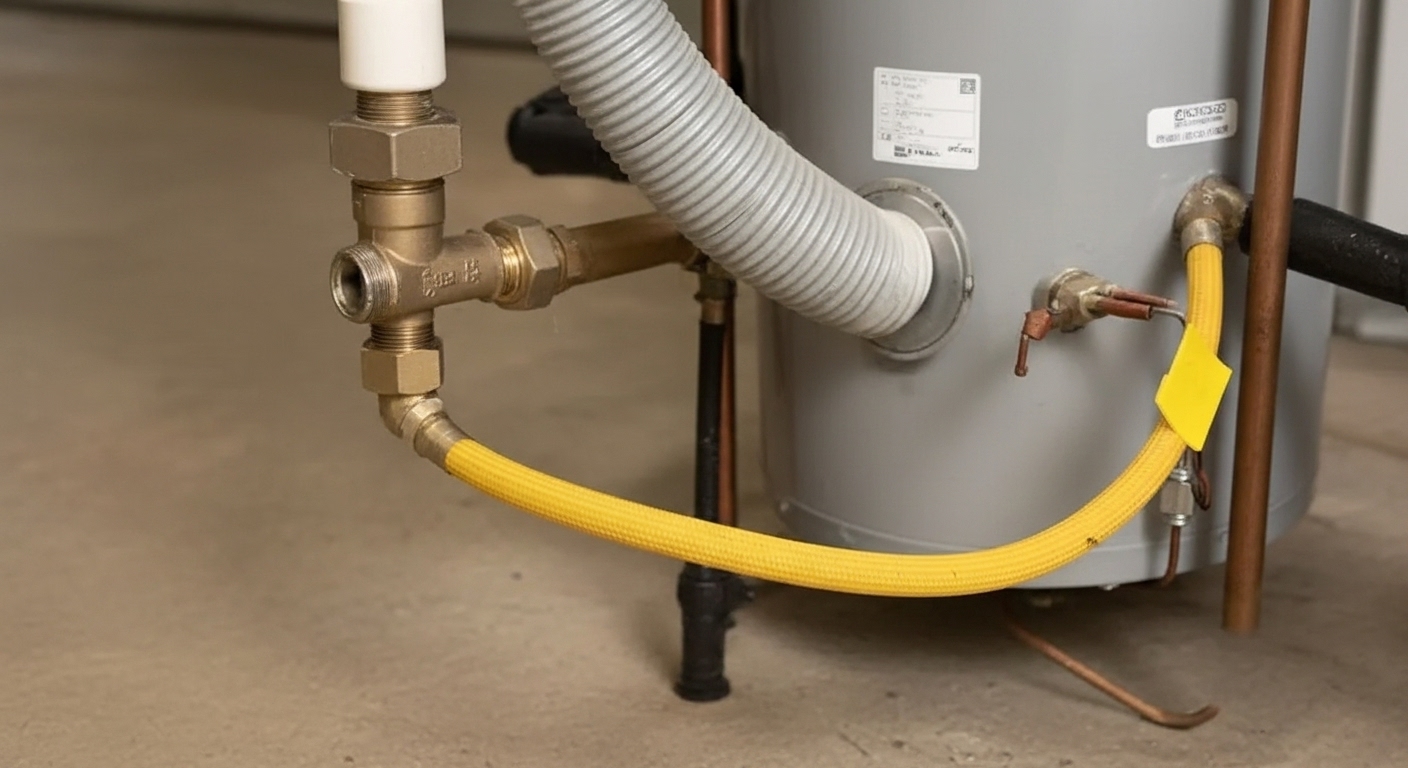
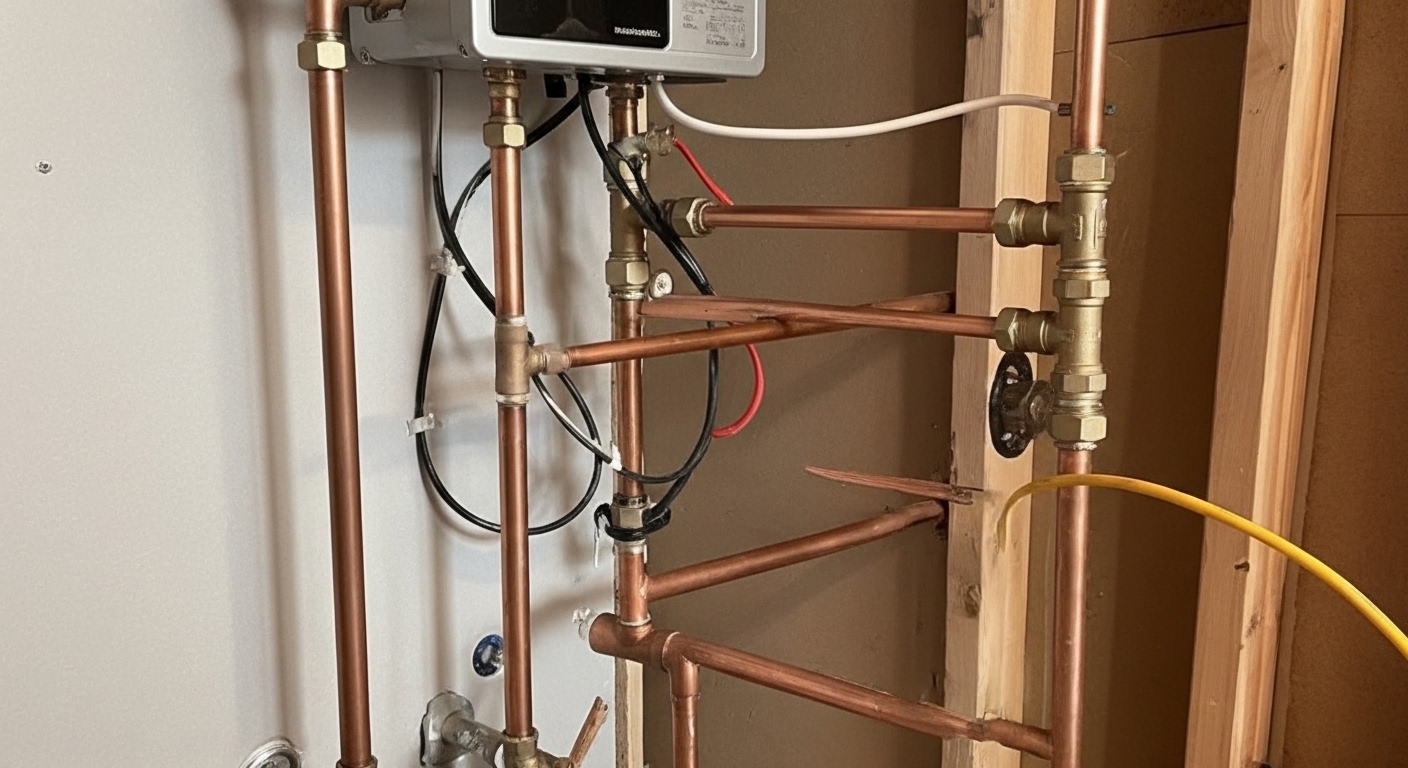
Call or text — a real person answers 24/7, and same-day replacement is the norm.
(983) 209-1502