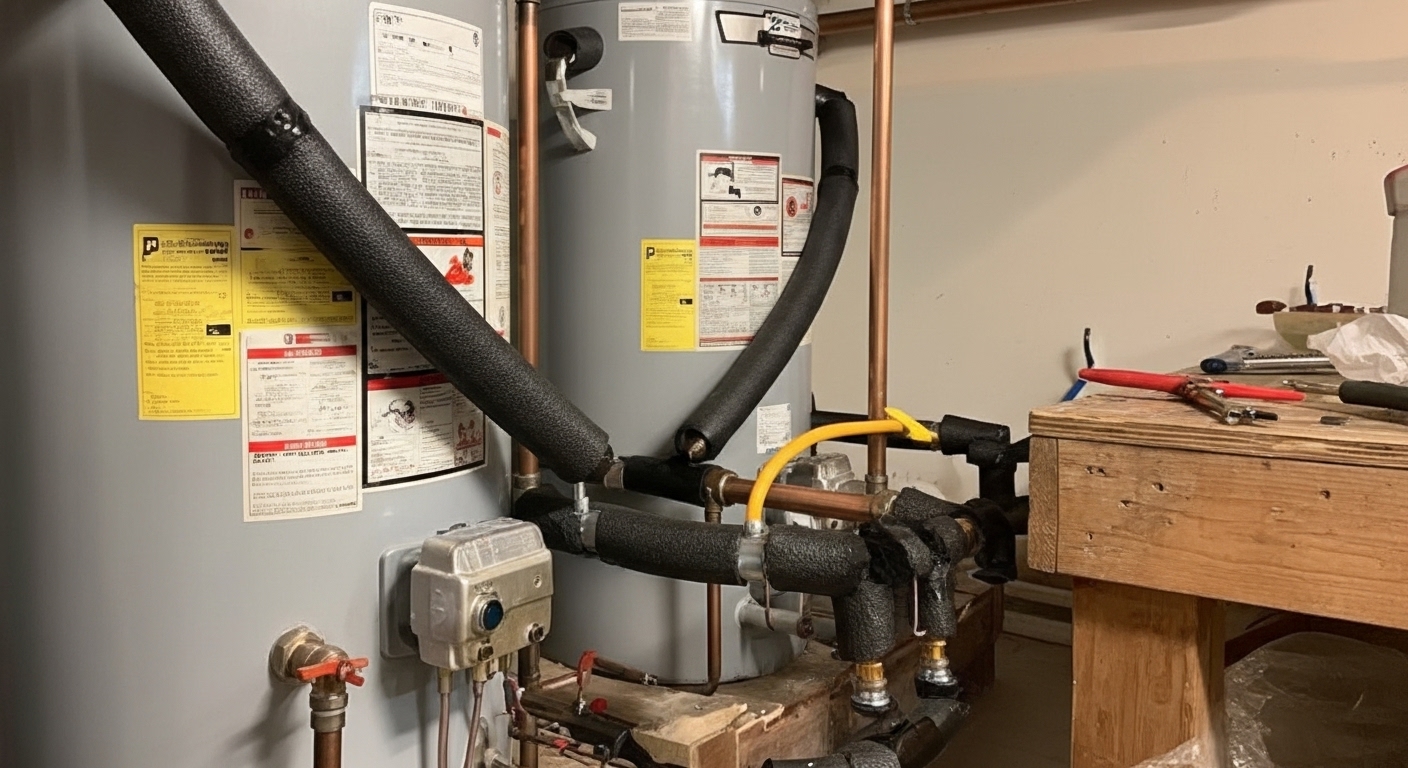
No hot water this morning? A puddle around the tank, or sounds it never used to make? We figure out what's wrong and fix it fast — tank or tankless, every make and model, usually the same day. Most water heaters give some warning before they quit. We work on gas, electric and tankless water systems, and the plumbing around them gets checked at the same visit.
Request a Free Callback
Thank You!
We'll get back to you shortly. For immediate help, call (983) 209-1502.
Nights, weekends, and emergencies — a real person answers.
Most repairs handled the same day you call.
Full price before any work starts. No surprises.
Gas, electric, and tankless — we know them all.
Most water heater trouble shows up one of these ways. If any sound familiar, give us a call — most get sorted in a single visit. Water heaters fail in a small number of predictable ways. Knowing which one you have narrows the visit before we arrive.
The most common call we get. Usually a tripped breaker, a worn-out heating element, or a pilot light that won't stay lit. Often a quick fix. An electrical fault is the usual cause on an electric unit. The heating element or the breaker, rarely the water heater itself. A plumbing check comes with it.
Running out faster than you used to? That's usually sediment building up in the tank or a heating element starting to fail. Sediment is what shortens most water heaters in hard-water areas. A flush buys years back on the same unit.
A little water can mean a loose fitting or a bad valve (easy fixes) — or a tank rusting through (time to replace). We'll tell you which. Water on the floor is worth tracing before it spreads. A fitting or valve is a small plumbing job; a rusted-through shell is not.
Hardened sediment on the bottom of the tank. It makes the unit work harder, but a flush usually quiets it down. That rumble is sediment hardening on the bottom. Left alone it makes the water heater work harder for the same hot water. Hot water comes back once it is flushed.
Often the inside of the tank corroding, or a worn-out anode rod that's supposed to protect it. Worth checking before it spreads. Rusty water usually means the inside is corroding. On older water heaters the anode rod is the first thing we check.
When a water heater runs longer to keep up, your bill creeps up. Usually a tune-up or a small repair brings it back in line. Efficiency drops before failure does. A tune-up on the unit and the plumbing feeding it usually brings the bill back down.
We work on every kind of water heater — gas, electric, and tankless — and we carry the common parts, so most repairs are done on the spot. Gas, electric and tankless water heaters all fail differently, and we carry parts for all three. Most repairs finish on the first visit.
A pilot light that won't stay lit, a bad gas valve, or a worn thermocouple (the little safety sensor that shuts the gas off). We get the burner firing again. Gas units come down to the burner, the valve, or the thermocouple. None of those need a new water heater. The gas line gets a leak check at the same time.
Burned-out heating elements and faulty thermostats are the usual culprits when an electric unit stops heating. Quick, affordable fixes in most cases. Electric units are simpler. The element and the thermostat cover most failures, and the electrical side is quick to test, and the connections get torqued before we leave.
Error codes, ignition trouble, or mineral buildup. We read the code, flush the unit, and get your endless hot water back. Tankless water systems throw codes rather than dying quietly. Descaling and an ignition check handle most of them. Tankless water units need that yearly in hard water.
On any unit, we also handle sediment flushes, anode rods, and a leaking pressure-relief valve — the small stuff that keeps a water heater running longer. If a repair isn't the right call, we also handle water heater replacement and new installation. The electrical and plumbing connections get checked on the same visit, whichever way it goes.
Simple, straightforward. Here's how it works.
Not sure it's worth fixing? Here's the honest math. If your unit is under about 8 to 10 years old and it's a heating element, thermostat, or pilot light, a repair almost always makes sense. But if the tank itself is leaking, you're getting rusty water, or it's needed fixing every few months, you'll usually come out ahead with a replacement. We tell you straight which way we'd go — and never push a new unit you don't need. Hard water shortens that window here, so a water heater in this area often reaches the decision sooner than the label suggests.
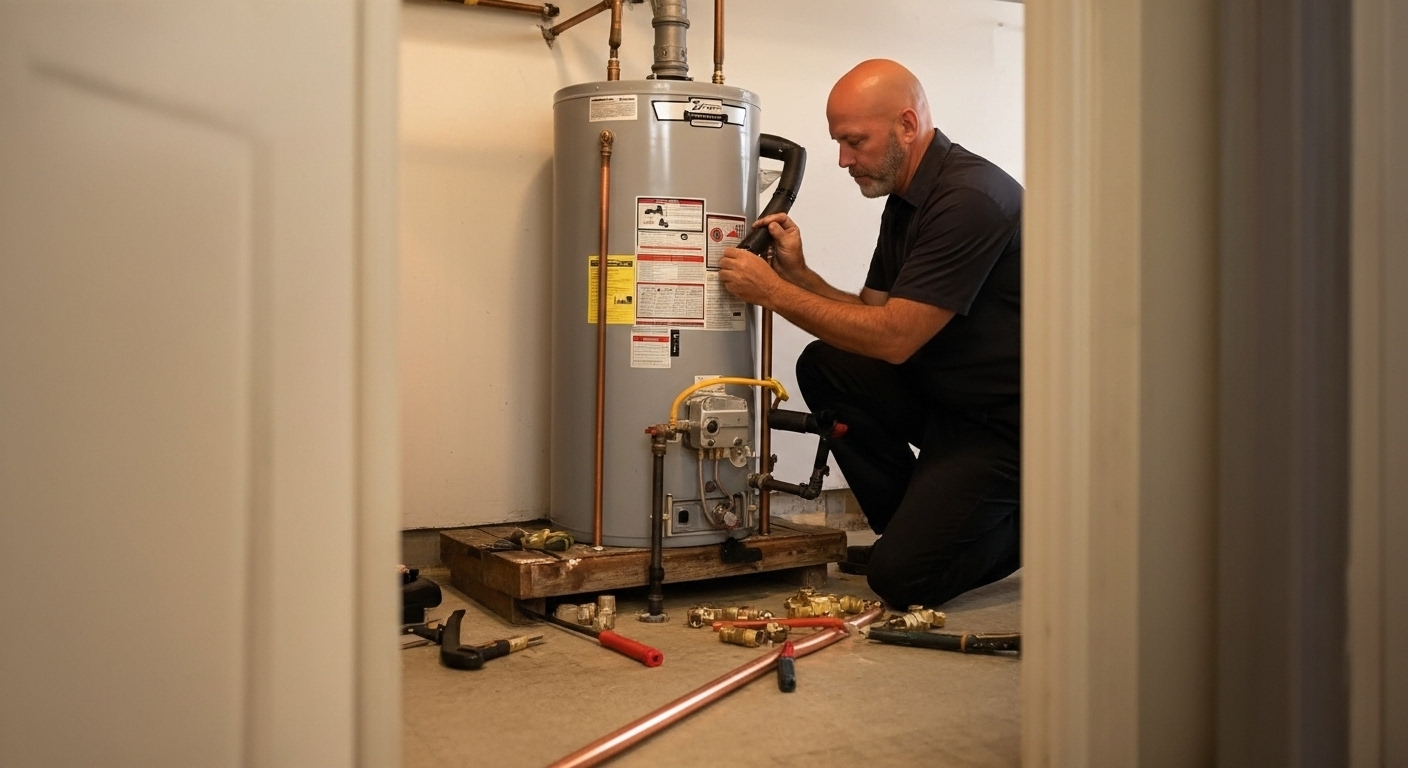
We're water heater experts, not a general plumber — repair, replacement, and installation is all we do, so we diagnose fast and get it right the first time. Water heaters are the whole trade here. The plumbing and electrical connections around the unit are part of the job, not a separate call.
Every make and model, the full price before any work starts, and a real person answers 24/7. Daniel's Water Heater Repair serves homeowners across Boulder and the surrounding metro. Gas, electric and tankless water heaters across the Boulder metro, with the plumbing connections handled as part of the work.
These come up on almost every job, so here's the straight answer to each.
If it's under about 8 to 10 years old and the problem is a part like an element, thermostat, or pilot light, a repair almost always makes sense. If the tank itself is leaking, you're seeing rusty water, or it needs fixing every few months, replacement is usually the smarter spend. We'll tell you straight which way we'd go. The plumbing around an older unit often needs attention at the same time, which is worth knowing before you decide.
It depends on the part and the unit, but repairs cost far less than a full replacement. You get the exact price upfront, before any work starts — no surprises on the bill. Parts and labor are quoted before we start. A full installation is a different number and you see both.
Yes — same-day service is the norm. If your hot water's out or your tank is leaking, call or text and we'll get to you as fast as we can. Same-day is the norm on water heaters. A leak moves you to the front of the list.
Yes. We read error codes, descale and flush the unit, and fix ignition issues to get your endless hot water back. Tankless water units need descaling on a schedule in hard water. We set that up while we are there.
A tank water heater typically lasts about 8 to 12 years; a tankless unit 15 to 20 with regular maintenance. Past that, repairs add up and replacement usually pays off. Water heaters age faster in hard water. The plumbing and the anode rod both tell you where the unit is in its life.
Every make and model — gas, electric, and tankless. We carry the common parts, so most repairs get done in a single visit. Every make and model, gas or electric. The electrical and plumbing connections come as part of the install, and plumbing repair on those connections is included.
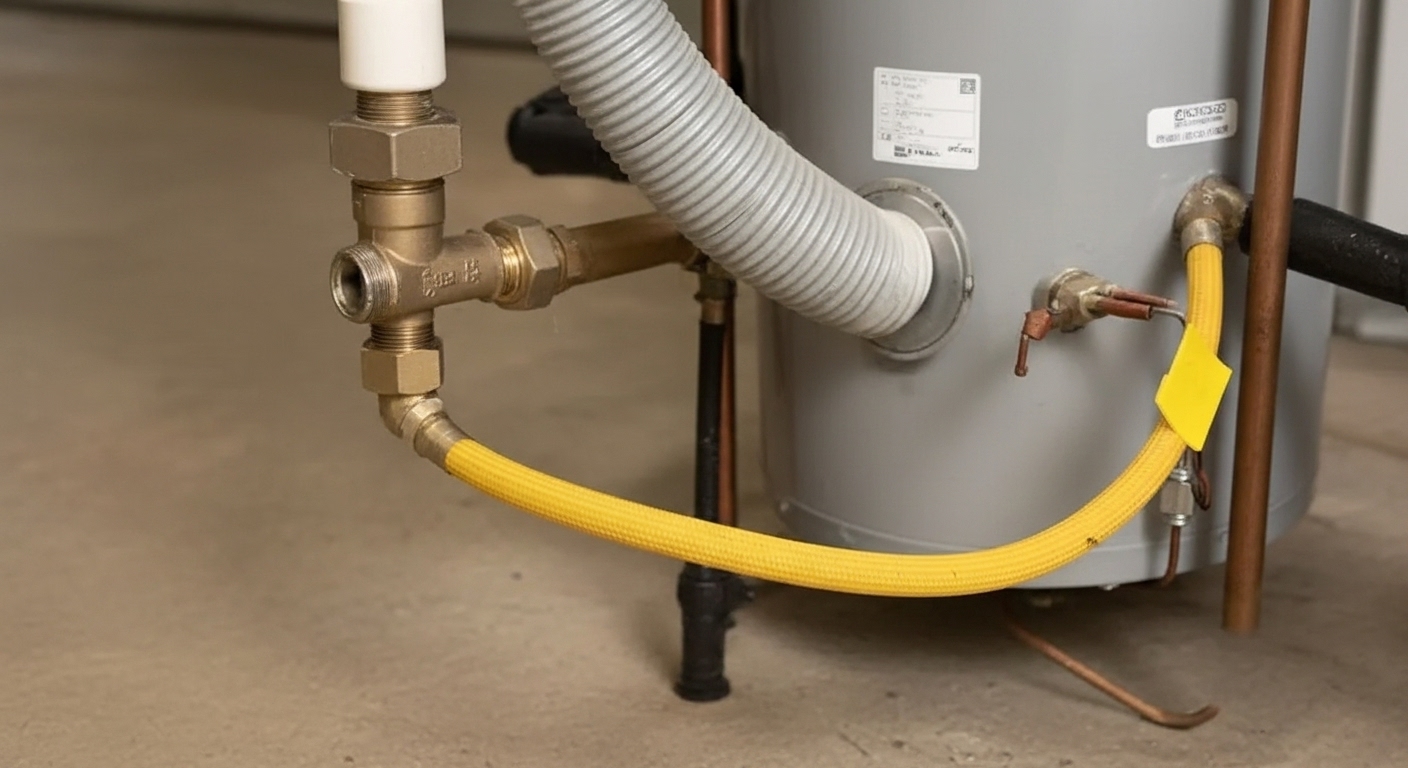
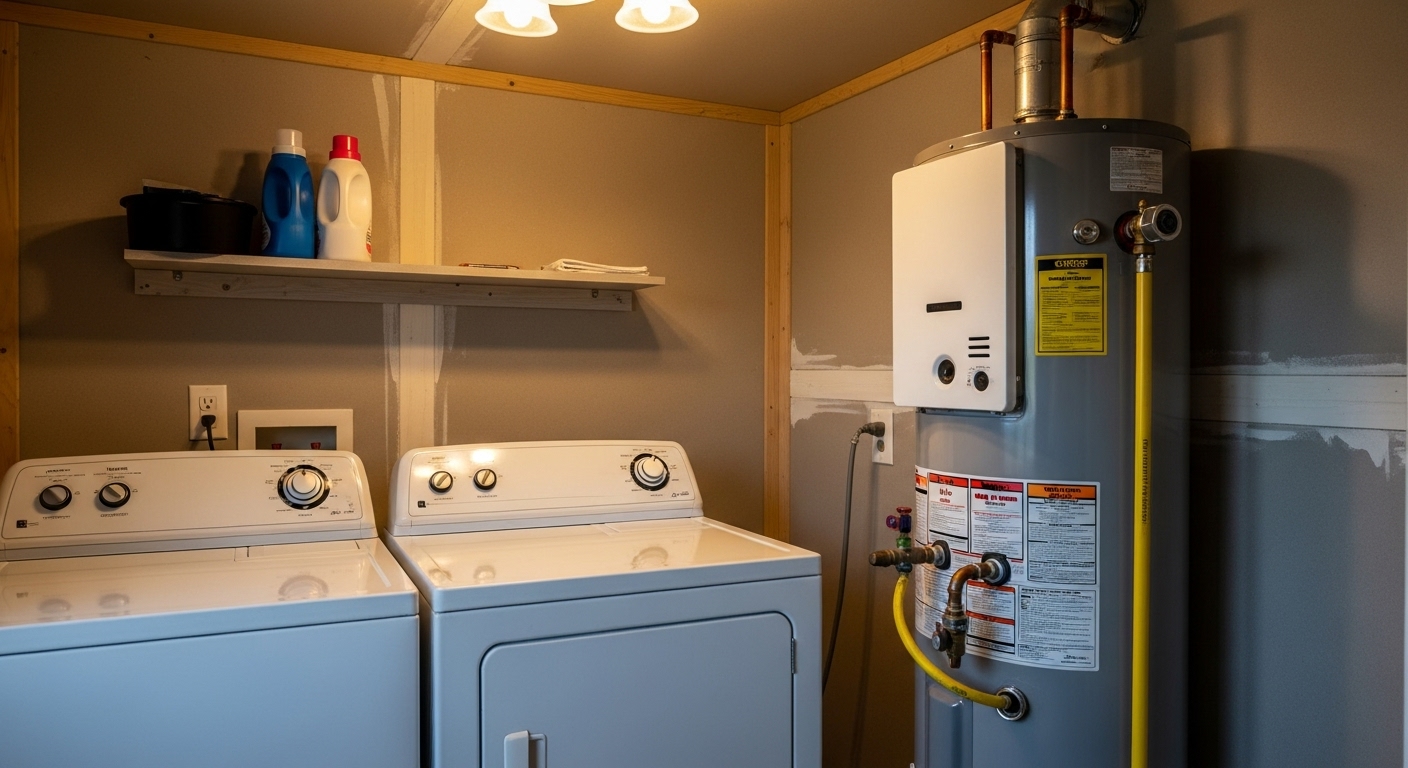
Call or text — a real person answers 24/7, and same-day service is the norm. A real person answers, and most water heater calls get a same-day slot.
(983) 209-1502